

First Quarter 2026
Never a dull news cycle! Investors were barraged with a staggering number of events during the quarter. There was no shortage of geopolitical headlines with the year kicking off with the capture and extradition of Venezuela’s then-president, Nicolás Maduro. And as the first quarter ends, conflict in the Middle East dominates the market narrative, and is roiling energy markets.
In the first quarter, the S&P 500 fell 4.3%. U.S. equities were marginally positive on the year until the conflict with Iran commenced in late February. The bar chart below shows how different asset classes have performed since the onset of the war at the end of February. Foreign equity markets have suffered worse than domestic markets. A stronger U.S. dollar in March contributed to some of the underperformance—another possible explanation is that higher energy prices have more of a negative impact on countries that import much of their energy. The U.S. has become a net exporter of oil in recent years and is much less reliant on the Middle East for energy. Other nations, particularly many in Asia, import much of their energy through the Persian Gulf.
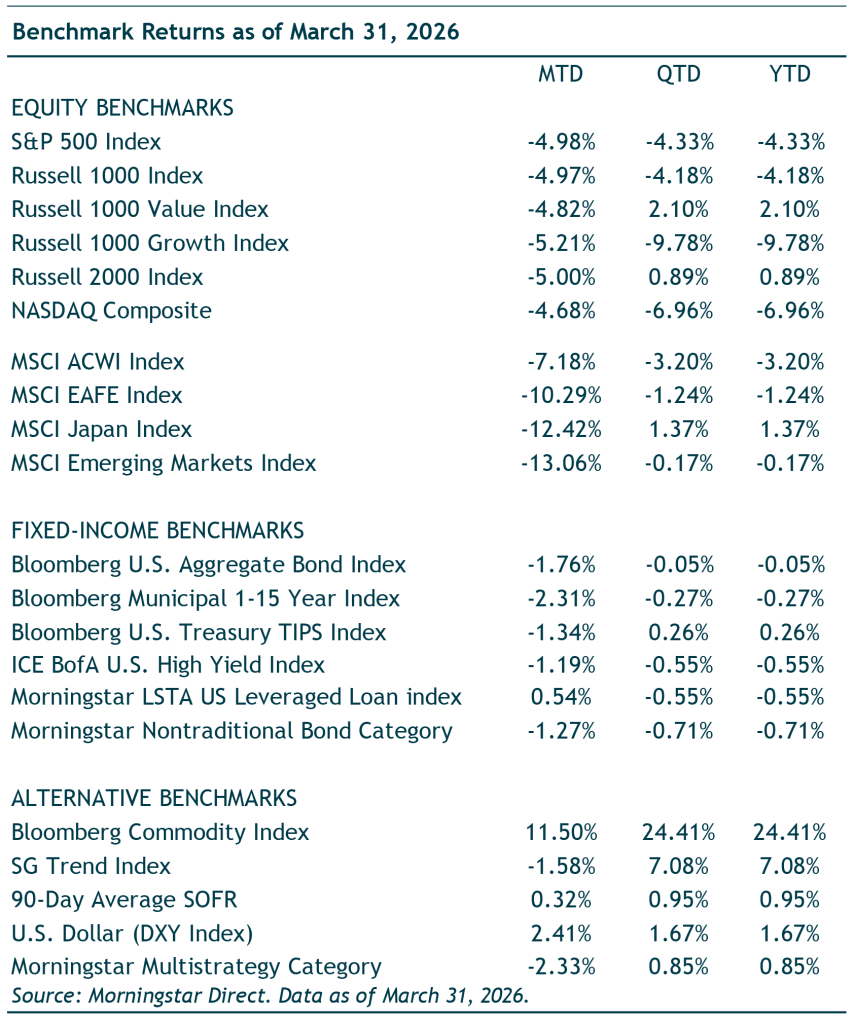
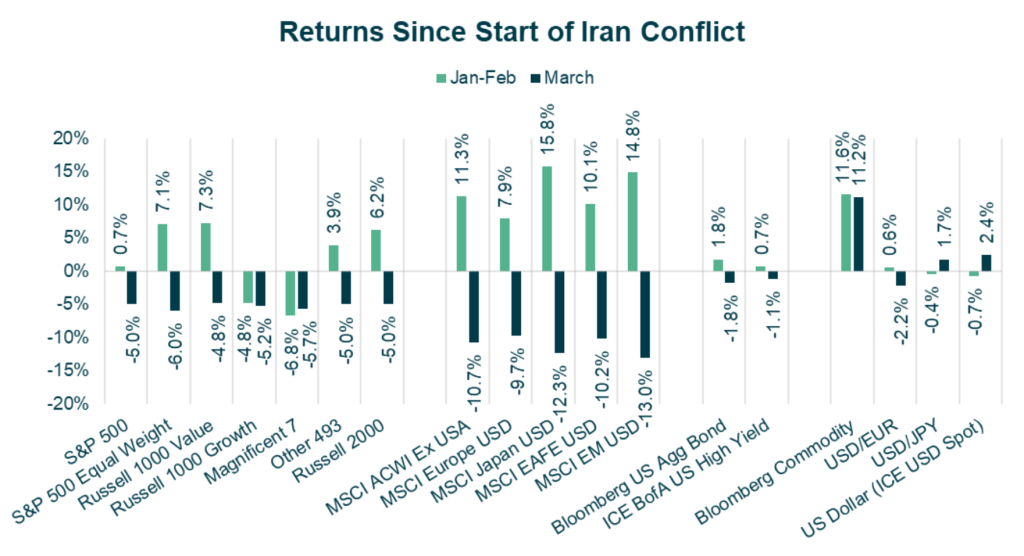
Unsurprisingly, energy stocks (up 38.2%) were the top performer within the S&P 500 during the first quarter. More defensive sectors, such as utilities, also outperformed. Mega-cap tech stocks were the laggard during the first two months of 2026 as fears around elevated AI spend and growing concerns that many software stocks could see their moats weakened by AI agents. The S&P North American Expanded Technology Software Index has already fallen more than 24% this year and is now down more than 30% from its high last September.
After delivering another rate cut last December, the Fed held rates steady at their two meetings in 2026. The Fed funds rate remains at 3.5%-3.75%. Since the onset of the war, the market has priced out any additional rate cuts this year. The implied number of cuts for 2026 was about two cuts at the end of February—however, the market is now pricing a Fed that will hold rates at current levels. At one point in March, the market started pricing in Fed rate hikes in 2026, however, we believe this was an overreaction and that central banks around the world are unlikely to hike rates this year (more on that below). U.S. rates have moved higher on fears of higher inflation from the spike in energy prices. After closing below 4% at the end of February, the 10-year Treasury rate has jumped to nearly 4.4% in recent days. The two-year Treasury, which is often cited as a good proxy for the Fed funds rate, has increased nearly 50 basis points to 3.9%.
Resiliency Despite Geopolitical Risks
Despite all the events of the quarter, the S&P 500 is only 6% off the all-time high it reached in January. Broadly, the global economy is still expanding, and inflation continues to moderate despite all the negative headlines. S&P 500 earnings growth grew at a 14% clip last year and is expected to grow 13.2% year-over-year in the first quarter, according to data from FactSet. For now, corporate profits and the broader economy continue to show resiliency despite all the gloom.
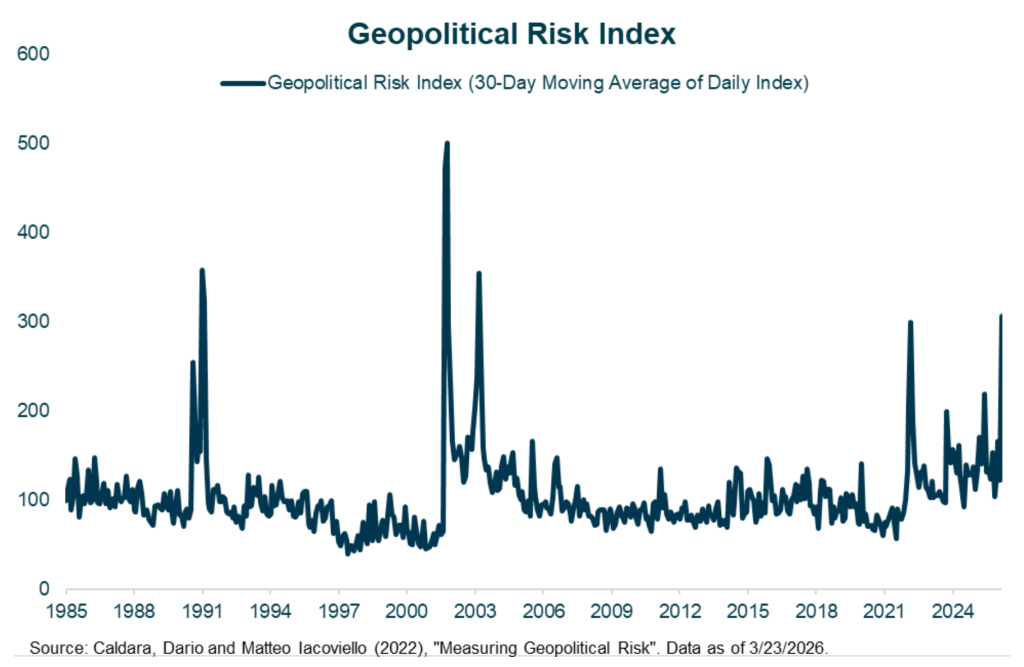
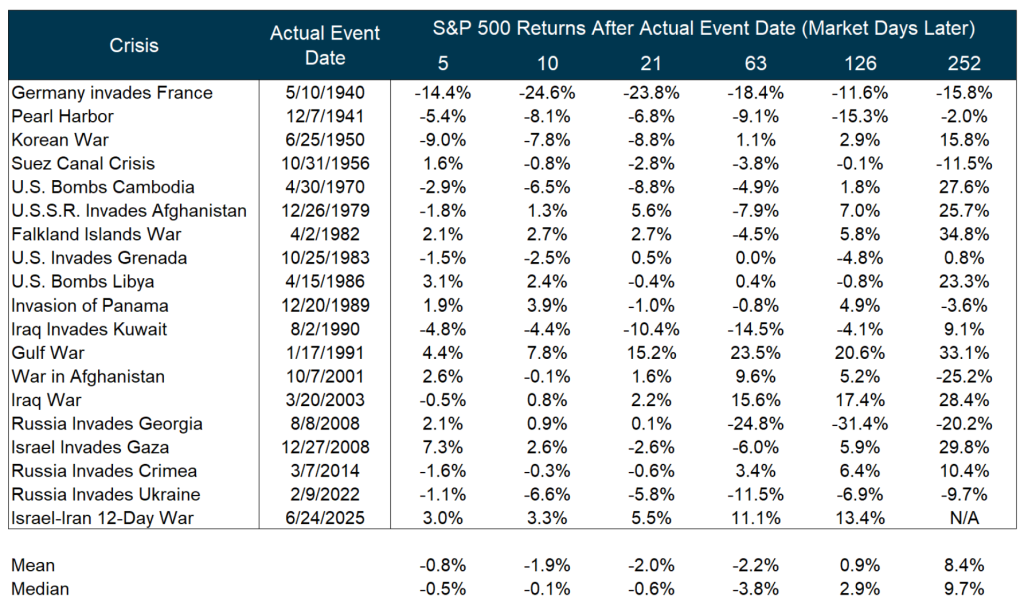
While geopolitical shocks can trigger sharp drawdowns, history suggests the impact is typically short-lived. Markets tend to reprice uncertainty quickly, with most of the reaction happening over days and weeks rather than quarters or years. Unless the event materially changes the path of the economy, inflation, or policy, risk assets can remain supported. The table below from Ned Davis Research shows the market reaction to military events since World War II. The current conflict in the Middle East has certainly resulted in negative equity returns, but nothing outside of the historical norm.
With the Strait of Hormuz effectively shut, 20 million barrels of oil that transit the Strait daily are stranded. This accounts for roughly 20% of daily global oil demand. Liquefied natural gas (LNG) is also heavily impacted by events in the Middle East. Qatar is responsible for 20% of global LNG supply, and at the moment, 100% of this is offline due to the war. It has been reported that Iran targeted and damaged a portion of Qatar’s Ras Laffan LNG complex, resulting in roughly 17% of their capacity being taken out and that it could be years to repair and bring back production to normal levels. Any escalation that results in additional energy infrastructure being damaged will have lasting effects on the energy market.
Oil and gas fields are not like faucets—they cannot just be turned off and on. Once they are shut in, there are engineering and geological risks that don’t guarantee their resumption at previous production levels. Restarting these fields will take weeks to months, plus another 3–4 weeks for tankers to transit through the Persian Gulf and to Asia. The longer the Strait of Hormuz remains closed, the worse it will be for the global economy. Recent signs of de-escalation from President Trump have given markets some hope.
Inflation Is Cooling, But Energy Is Back in Focus
Understandably, the conflict in Iran has sent oil prices higher and is stirring memories of the inflationary spike of 2022 following the start of the Ukraine/Russia war. Broadly speaking, the current facts lead us to believe that today’s environment is different from a few years ago. Back in 2022, inflation was driven by multiple forces that all came together at the same time—massive fiscal stimulus, ultra-accommodative monetary policy, a surge in money supply, pent-up demand from the pandemic, and disruptions to supply chains. Higher energy costs certainly played a role in the inflation spike; however, it was far from the only factor. Today, many of these factors are not in play. Rates are significantly higher, liquidity is being pulled from the system, the labor market has cooled down, and wage growth has decelerated. For the moment, any increase in inflation in the coming months or quarters will be driven by supply constraints rather than excess consumer demand.
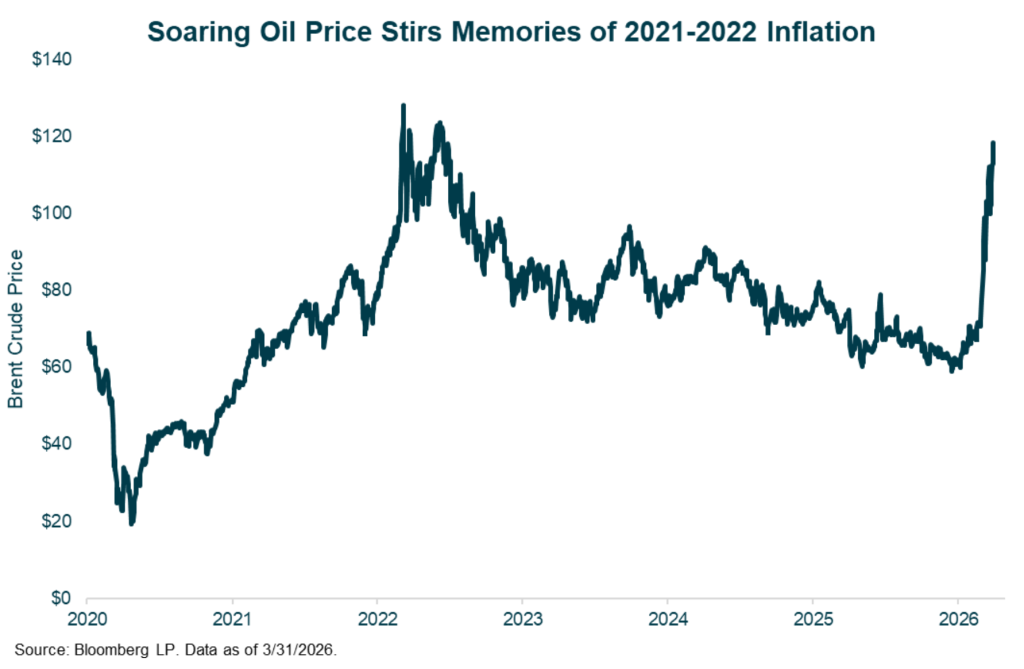
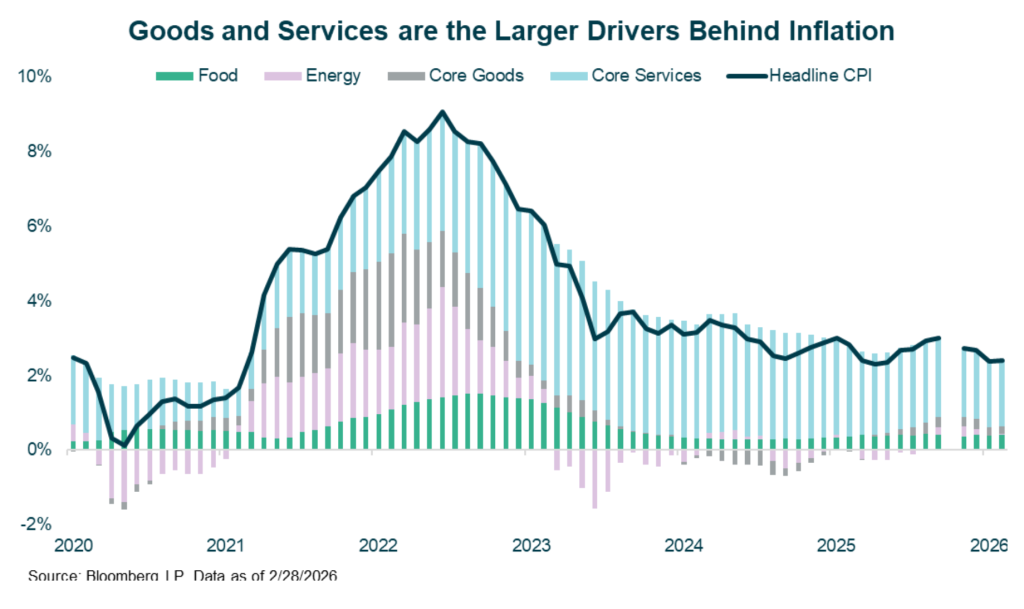
Research from the Federal Reserve suggests that energy prices accounted for only a portion of the overall inflation increase. The Fed estimates that the oil price spike added roughly half a percentage point to overall inflation during 2022. Inflation has certainly cooled in recent years (see chart below); however, it remains above the Fed’s 2% target. Central banks tend to focus on core inflation readings, i.e., those that exclude the more volatile food and energy prices. Given this, the Fed is more likely to respond to higher oil prices by holding rates where they are instead of hiking them. We are seeing this in the futures market, where further rate cuts this year are being priced out of expectations. For now, our current base case is that the current oil shock is far more likely to produce a temporary bump in headline inflation rather than a repeat of the broad and persistent inflation cycle experienced a few years ago.
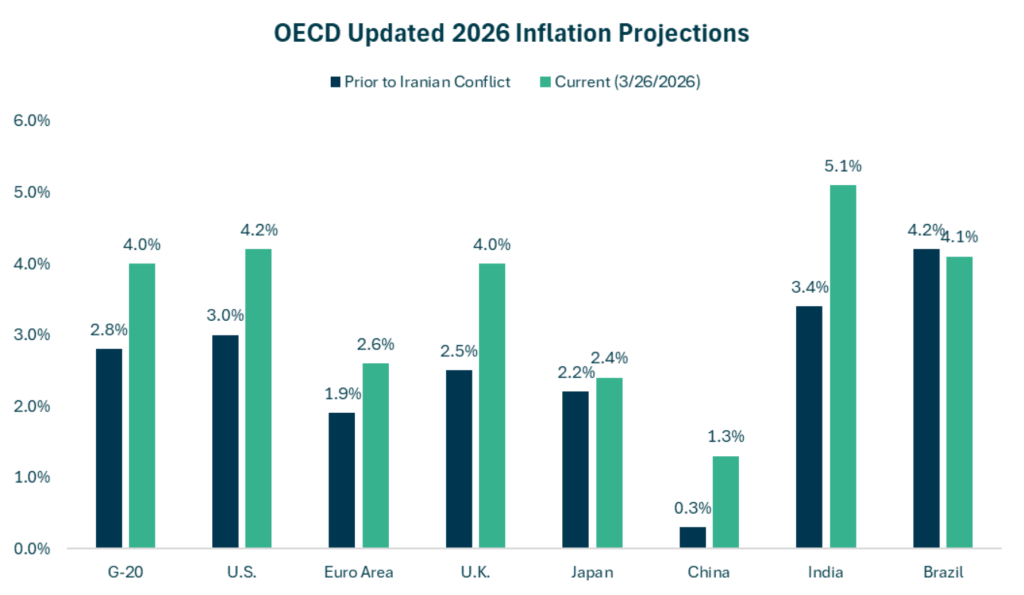
The OECD recently published its updated inflation projections for this year and next (see table below). Prior to the war, U.S. inflation was expected to be 3% in 2026, however, higher energy costs have increased the OECD inflation estimate to 4.2% for this year. Their 2027 estimate of inflation, however, is lower than their previous estimate at 1.6%. This signals an expectation that the oil shock will be temporary.
Equity Markets
After peaking in late February, global equities (MSCI ACWI) have fallen 7.6% from that high. Global equities finished the quarter with a negative return of 3.2%. U.S. stocks underperformed international stocks over the full quarter—S&P 500 fell 4.3% compared to a modest 0.7% loss for the MSCI ACWI ex. U.S. Index. However, since the onset of the Iran conflict, U.S. stocks have outperformed. This is partly due to a strengthening U.S. dollar in March, acting in its typical safe-haven fashion.
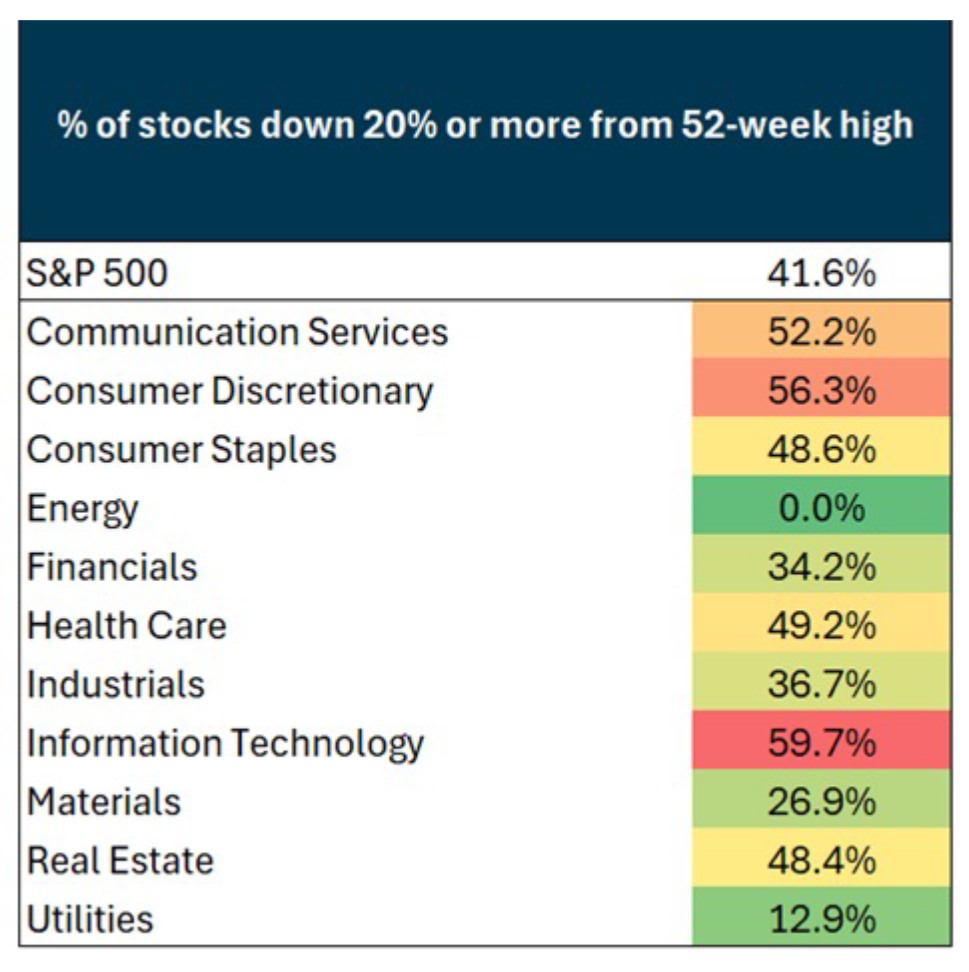
While the S&P 500 is off roughly 6% from its high, the index is flat since last summer. However, underneath the surface, there is meaningful volatility at the constituent level. Unlike over the last few years, more than half of S&P 500 stocks are outperforming the broader index return so far in 2026. Dispersion across sectors has increased as well—with the energy sector up over 38% this year while the financials and tech sectors have fallen by 9%. A historically large number of S&P 500 stocks are setting 52-week highs and 52-week lows at the same time. Based on our internal calculations, 41.6% of the stocks within the S&P 500 are already off more than 20% from their 52-week high. See the table.
The divergence in returns is most evident in the technology sector. Software names have taken the brunt of the selling thanks to worries about AI technology eating away at their moat. Whereas other areas of the tech sector, such as those tied to the AI buildout, have fared much better. There is a historic spread within the tech sector between those names making new highs and those making new lows.
To date, the drawdown has mainly been through a repricing of the market’s lofty valuation. The forward P/E of the S&P 500 has contracted nearly 12% this year, while earnings expectations have not come down meaningfully at this point. It is sentiment and uncertainty about the future that have compressed multiples. Fundamentals remain largely intact with double-digit earnings expected for this calendar year.
Fixed Income
After a quiet start to the year, the threat of energy-driven inflation unsettled global fixed income markets, with U.S. interest rates rising between 35–45 basis points in March, with larger reactions from European markets that have greater exposure to oil & gas produced in the Persian Gulf.
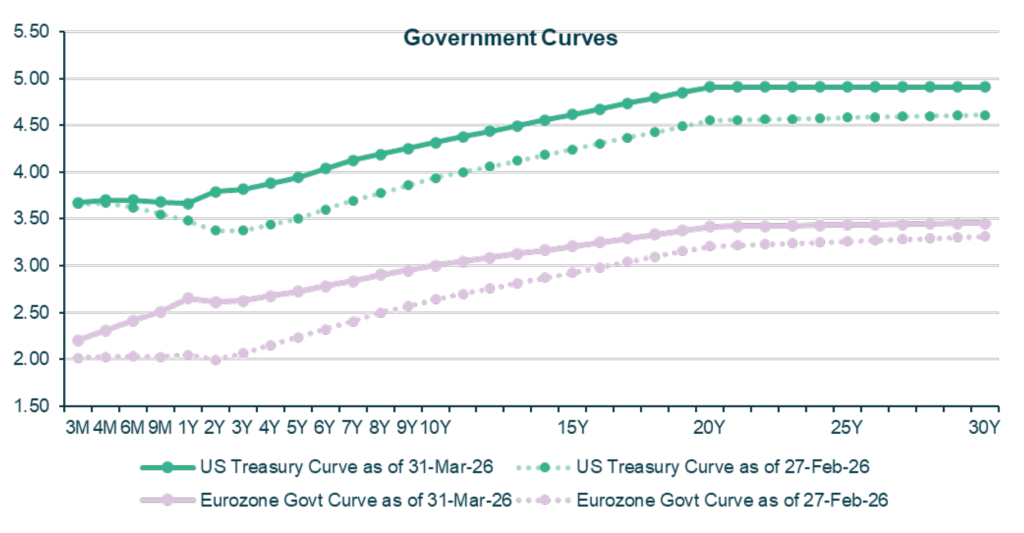
At the same time, markets have dramatically revised their expectations for central bank policy. Investors now anticipate that the Federal Reserve will deliver no rate cuts for the remainder of the year (compared to expectations of two cuts at the end of February).
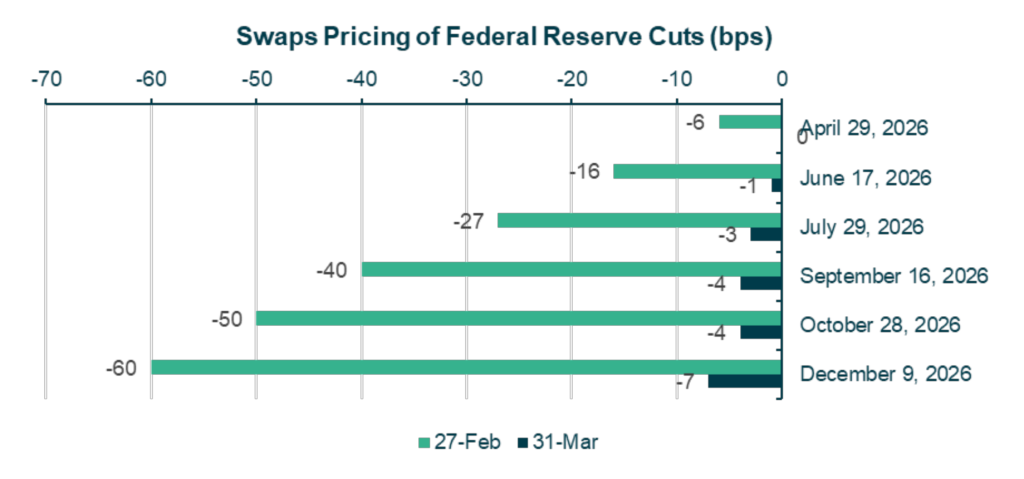
We are somewhat skeptical of the scale of this repricing. The recent rise in yields may represent an attractive entry point for yield-seeking investors, particularly as both a rapid resolution and a more prolonged conflict in the Persian Gulf could result in the need for interest rate cuts.
In the shorter-duration scenario, the recent increase in energy prices driven by the disruption to supply through the Strait of Hormuz is likely to be short-lived or ‘transitory’ in central bank speak. Central banks tend to focus on core measures of inflation, which exclude more volatile components such as energy (including Core Personal Consumption Expenditures in the U.S. and Core Harmonized Index of Consumer Prices in the Eurozone). As such, we find it unlikely that a shorter-duration shock in an element of inflation that is purposely excluded from their core focus would result in interest rate hikes.
A more prolonged conflict and subsequent higher structural energy prices would likely weigh on economic activity via higher input costs and weaker demand. In such an environment, it seems hard to fathom that central banks would raise rates to fight an inflationary force they cannot control, and are much more likely to lower rates to stimulate a weakening economy.
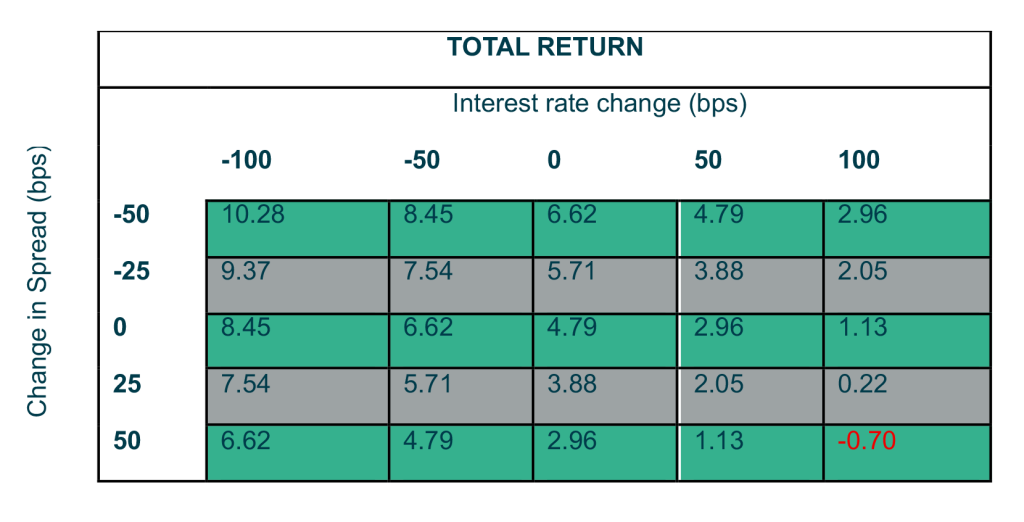
One of the wonderful things about bonds is that in the absence of defaults, we can make accurate assumptions regarding forward-looking returns given both maturity value (par or $100) and starting yield are both known quantities. Using the Bloomberg U.S. Intermediate Credit Index as an example, the current yield of the index is 4.79% (which is also the expected return if neither interest rates nor credit spreads change). As the table below illustrates, it would take a combination of interest rates rising over 100 basis points and credit spreads widening by 50 basis points or more for the index to produce a negative return over the next 12 months.
Outlook
The conflict in Iran has introduced a number of unknown variables into the investment outlook. Thus far, markets have largely looked through the clash; however, with each passing day the impact on the global economy becomes greater. Energy prices are rising quickly, with Asian and European economies having more exposure than the U.S. We do not believe central banks will react to an energy price spike, however if the conflict drags on and energy prices remain elevated it is likely that other aspects of inflation will increase, pushing on living standards and potentially forcing the central banks’ hand.
Absent the conflict in Iran, our outlook continues to remain constructive, with real GDP growth and supportive consumer spending and ongoing investment in infrastructure, energy and artificial intelligence all expected to enhance productivity.
Despite recent weakness, equity market fundamentals remain strong. We have begun to see market leadership broaden away from mega-capitalization technology stocks to smaller and more value-oriented companies, providing crucial breadth for the market. Importantly, corporate earnings expectations continue to expand, with the S&P 500 earnings expected to grow 13.2% in 2026 according to FactSet (up from 12.8% at year-end).
Credit fundamentals continue to remain sound. The market has now discounted lower policy rates; however, it is our belief this will revert with more certainty surrounding the Iranian conflict. Attractive starting yields have resulted in fixed income returns increasingly driven by income rather than price appreciation.
There is no question that the tail risks have increased because of the Iranian conflict; however with the range of outcomes so wide we do not believe it is prudent to make any large-scale changes as a one-size solution does not fit all clients. We remain vigilant to the changing situation and thank you for your continued trust and partnership.
Certain material in this work is proprietary to and copyrighted by Litman Gregory Analytics and is used by Argent Financial Group with permission. Reproduction or distribution of this material is prohibited, and all rights are reserved.


