


BY: Tom Stringfellow, CFA®, CPA®, CFP®
Chief Investment Strategist
MARKETS ARE PRICING RESOLUTION
The Economy Pivoted Before the Federal Reserve
Capital Formation, Corporate Investment and a More Durable Expansion
In This Issue
- The economy appears to have strengthened before the Federal Reserve altered monetary policy, suggesting the expansion had already become increasingly self-sustaining.
- Corporate capital spending continues broadening beyond artificial intelligence, supporting productivity gains across manufacturing, infrastructure, transportation and industrial technology.
- Consumer spending and housing remain resilient despite elevated interest rates, sustaining economic growth while avoiding the broad deterioration many economists anticipated.
- Corporate earnings in both the United States and Europe continue exceeding expectations, reinforcing management confidence and supporting current equity valuations.
- Investors should remain focused on capital formation, earnings growth and underlying economic fundamentals rather than reacting to short-term geopolitical headlines.
Executive Summary
Over the past several years, investors have become conditioned to believe that virtually every meaningful change in financial markets begins with the Federal Reserve. Whether discussing inflation, employment, corporate earnings or equity valuations, monetary policy has occupied center stage in nearly every investment discussion.
While investors remained focused on the timing of future Federal Reserve policy decisions, the economy continued strengthening beneath the surface. Businesses accelerated capital investment, improved productivity, and corporate earnings consistently exceeded expectations, while consumers continued to spend despite elevated borrowing costs. Housing activity stabilized even with mortgage rates remaining historically restrictive. Together, these developments indicate the expansion has become increasingly self-sustaining before any meaningful change in monetary policy.
Second-quarter economic data reinforced that transition. Real GDP expanded at an annualized rate of 1.5%, but the headline understated the strength of private demand. Real Final Sales to Private Domestic Purchasers—a measure that removes distortions created by inventories, trade and government spending—advanced 3.9%, up from 1.7% in the first quarter. Equipment investment increased at roughly a 15% annualized pace, providing clearer evidence that business spending, rather than monetary stimulus, has become an important source of economic momentum.
Corporate America continues to validate that assessment. More than 60% of S&P 500 companies have reported second-quarter results, with approximately 86% exceeding earnings expectations. Even after excluding unusually large gains reported by Alphabet and Amazon, earnings growth remains historically strong and broadly distributed across sectors. Revenue growth has also accelerated, confirming that improving profitability reflects expanding business activity rather than financial engineering alone.
The same pattern is developing internationally. European companies are producing their strongest earnings growth in several years, led by Energy, Technology and Financials. Positive estimate revisions have broadened across nearly every sector, challenging the prevailing narrative that Europe remains materially weaker than the United States.
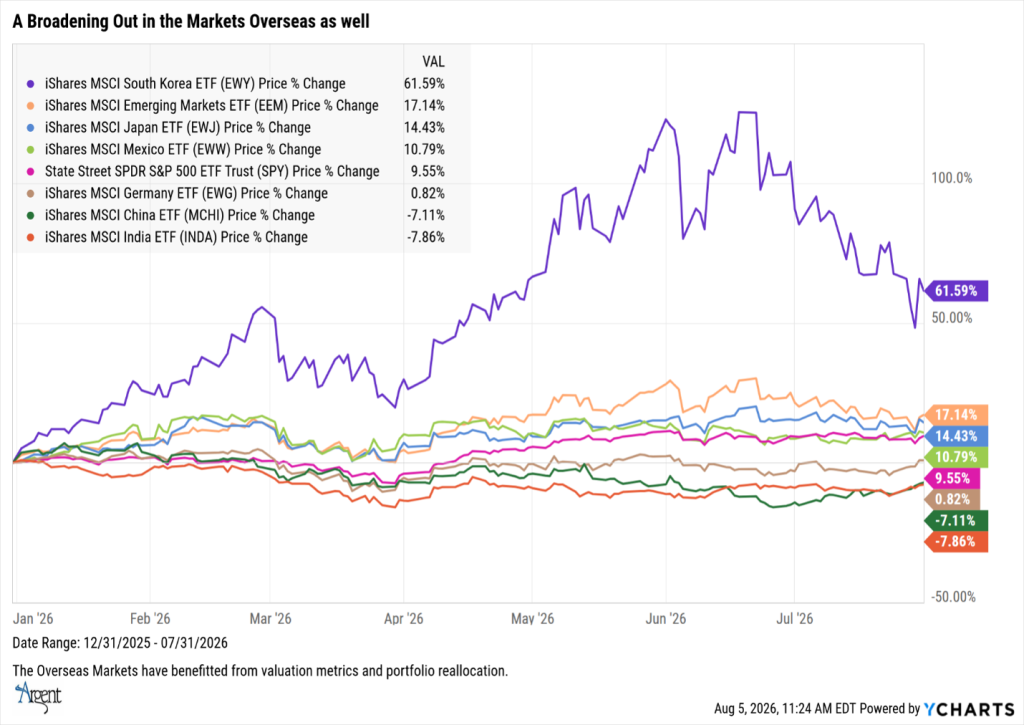
Equally important, businesses continue investing aggressively. Artificial intelligence remains an important catalyst, but today’s capital spending extends well beyond technology. Utilities are modernizing electrical grids, manufacturers continue reshoring production, transportation networks are expanding, and industrial automation investments remain robust. These expenditures increase productive capacity rather than simply supporting near-term consumption, a distinction that historically has produced more durable economic expansions characterized by stronger productivity, higher wages and improving corporate profitability.
Markets have likewise demonstrated increasing resilience despite continued geopolitical uncertainty. During the past year, investors have absorbed tariff announcements, renewed conflict involving Iran, elevated oil prices and persistent inflation concerns. Each development initially generated volatility, yet markets consistently returned their attention to corporate earnings, economic growth and business investment. While geopolitical developments remain meaningful risks, they have not materially altered the broader economic trajectory.
This month’s Market Perspective examines why capital formation—not monetary policy—has increasingly become the principal driver of economic growth, why corporate earnings continue supporting equity valuations, and why investors may benefit by focusing more on productive investment than the daily news cycle.
For long-term investors, the evidence continues to suggest that economic fundamentals remain considerably stronger than prevailing sentiment often implies.
The Economy Pivoted Before the Federal Reserve
For much of the past three years, the investment narrative has revolved around a single question: when will the Federal Reserve begin easing monetary policy? Inflation, employment reports, consumer confidence and virtually every significant market movement have been viewed through the lens of future interest-rate decisions.
While investors remained focused on the Federal Reserve, however, the economy quietly continued strengthening on its own. Second-quarter economic data suggests the expansion became increasingly self-sustaining before any meaningful change in monetary policy occurred. Businesses accelerated capital spending, corporate earnings strengthened, productivity improved, and consumers continued spending despite elevated borrowing costs. Rather than waiting for lower interest rates to stimulate activity, the private sector appears to have adapted to the current rate environment.
Real Gross Domestic Product expanded at an annualized rate of 1.5%. While the headline suggested a moderation in growth, inventories, trade, and government expenditures obscured a much stronger private-sector result. Real Final Sales to Private Domestic Purchasers accelerated to 3.9% from 1.7% in the first quarter, confirming that household consumption and business fixed investment remained healthy. Equipment investment advanced at roughly a 15% annualized pace, underscoring the growing contribution from productive capital spending.
Business investment continues to represent one of the most important contributors to that strength. Capital expenditures remain elevated as corporations expand manufacturing capacity, modernize production facilities, invest in automation, strengthen logistics networks and accelerate technology deployment. Although artificial intelligence has captured most of the headlines, investment activity extends well beyond the technology sector. Utilities continue expanding electrical generation and transmission capacity. Manufacturers remain committed to reshoring production, while transportation and industrial companies continue modernizing equipment to improve productivity and reduce operating costs.
This broadening investment cycle represents an important shift from earlier phases of the recovery. Much of the post-pandemic expansion initially depended upon extraordinary fiscal stimulus and exceptionally accommodative monetary policy. Today’s expansion increasingly reflects business confidence, rising profitability and management teams willing to commit long-term capital despite higher financing costs. Corporate executives generally authorize multi-year investments only when they possess confidence that future demand will justify those expenditures. Current capital spending patterns therefore provide an important indication of business expectations for future economic activity.
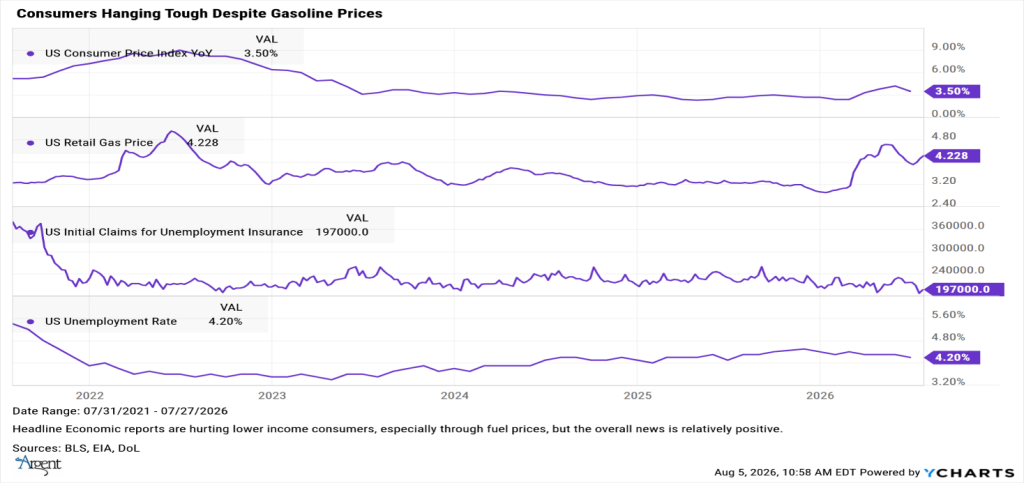
The labor market reinforces that conclusion, although momentum has moderated. June payrolls increased by 57,000 after April and May were revised lower by a combined 74,000, and the unemployment rate eased to 4.2% largely because labor-force participation declined. Average hourly earnings remained 3.5% above year-earlier levels, initial jobless claims stayed historically low, and businesses appeared more inclined to retain skilled workers than reduce payrolls aggressively. The data describes a labor market that is cooling, but not contracting, while wage growth continues supporting household income.
Consumers have demonstrated similar resilience. June retail sales increased 0.2% from May and 6.7% from a year earlier, while spending continued across travel, health care, restaurants and household services. Higher interest rates have moderated discretionary purchases in selected categories, but wage growth and generally solid household balance sheets continue supporting activity. The evidence points to a consumer becoming more selective rather than withdrawing from the economy.
Inflation remains the principal constraint on that otherwise constructive picture. June CPI held at 3.5% year over year, with core CPI at 2.6%, while headline and core PCE eased to 3.7% and 3.3%, respectively. The simultaneous moderation in CPI and PCE was encouraging, but the gap between core PCE and core CPI indicates that services inflation remains sticky. Inflation has therefore improved without returning to the Federal Reserve’s 2% objective, leaving policy restrictive even as economic growth continues.
Taken together, these developments suggest an economy increasingly capable of generating sustainable growth independent of additional monetary stimulus. Rather than asking whether lower interest rates will rescue the economy, investors may increasingly need to consider whether the economy has already demonstrated sufficient strength to continue expanding on its own.
Capital Formation Has Become the Economy’s Second Engine
Perhaps the most significant economic development of the past year has received remarkably little attention.
While artificial intelligence continues dominating financial headlines, a much broader investment cycle has quietly emerged across the economy. Businesses are committing substantial amounts of capital not simply to increase output today, but to expand productive capacity for years to come.
That distinction separates today’s expansion from many previous economic cycles.
Consumer spending remains the largest contributor to economic activity, but business investment has increasingly become a second engine of growth. Equipment investment increased at roughly a 15% annualized rate during the second quarter, and large technology companies continue directing hundreds of billions of dollars toward data centers, advanced semiconductors, networking equipment and cloud infrastructure. Those expenditures are supporting productivity improvements, expanding manufacturing capacity, modernizing infrastructure and strengthening supply chains across numerous industries.
Large technology companies continue investing hundreds of billions of dollars in data centers, advanced semiconductors, networking equipment and cloud infrastructure. Those expenditures remain historically significant and should continue supporting technology earnings for years to come. The beneficiaries, however, extend well beyond the technology sector.
Industrial companies are investing in automation, robotics and precision manufacturing. Transportation firms continue modernizing logistics networks and equipment. Construction companies remain heavily engaged in manufacturing facilities, infrastructure projects and energy development, while financial institutions continue investing in technology platforms designed to improve efficiency and client service.
Manufacturing investment remains particularly noteworthy. Reshoring initiatives continue encouraging companies to relocate portions of their supply chains back to North America. Semiconductor fabrication facilities, advanced manufacturing plants and industrial production capacity continue expanding as corporations seek greater supply chain resilience following the disruptions experienced during recent years. These investments should translate into stronger productivity over time.
Recent productivity gains suggest businesses are beginning to realize those benefits. Although productivity statistics naturally fluctuate from quarter to quarter, the broader trend has improved meaningfully compared with earlier stages of the recovery. Current capital expenditure increasingly appears directed toward expanding long-term productive capacity rather than simply meeting near-term demand.
The S&P 500 has produced one of its strongest earnings seasons in several years. FactSet’s July 31 snapshot showed 61% of index companies had reported, with 86% exceeding earnings estimates and 77% surpassing revenue expectations. Aggregate earnings were 31.4% above estimates, or 9.2% after excluding the unusually large gains reported by Alphabet and Amazon. The blended year-over-year earnings growth rate reached 47.4%, or 28.8% excluding those two companies, while blended revenue growth reached 14.1%. These source-specific figures were consistent with broader public reporting showing unusually strong profit and revenue growth.
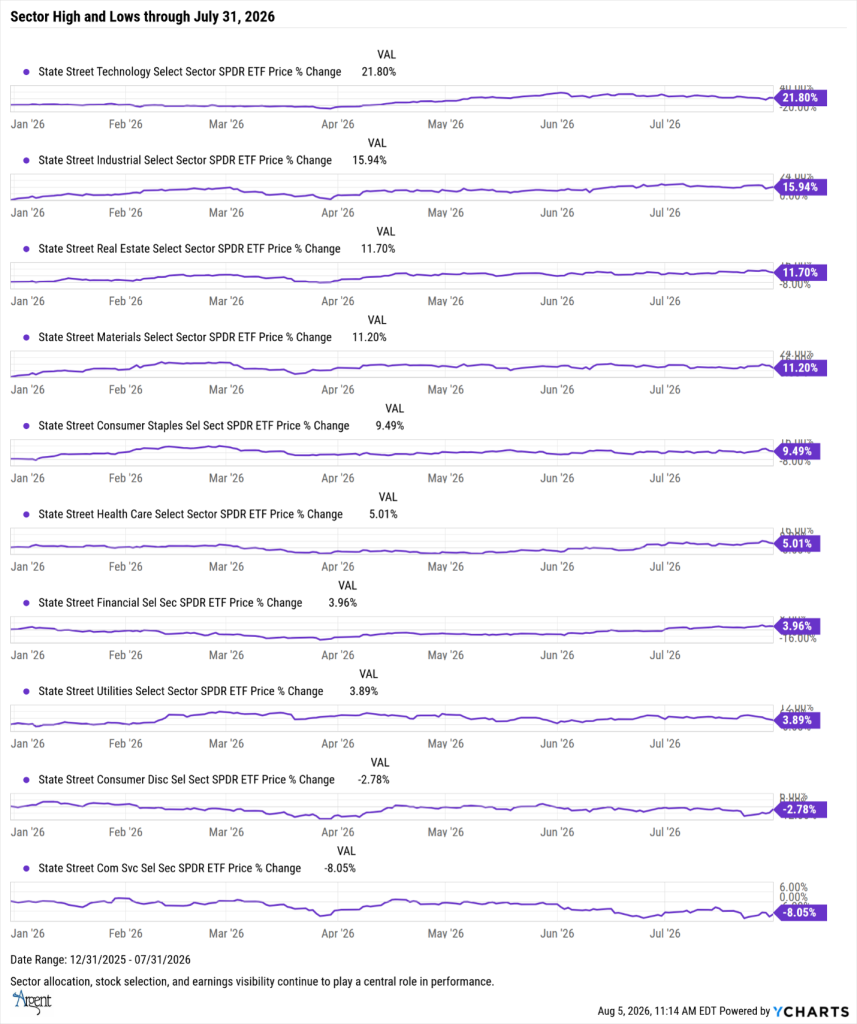
Perhaps more encouraging is the breadth of that earnings growth. Technology remains an important contributor, but Energy, Industrials, Financials, Materials and Communication Services have likewise reported substantial year-over-year improvement. The current expansion clearly extends well beyond a narrow group of mega-cap technology companies.
European companies tell a similar story. FactSet’s July 24 review showed STOXX Europe 600 earnings growth running at about 18% on a mean basis and 20% on a median basis, well above the roughly 11% growth expected at the end of March. Energy remained the largest positive contributor, with Financials, Technology and Industrials also contributing, while most sectors reported year-over-year earnings growth.
For nearly three years, investors have anticipated that higher interest rates would eventually force a meaningful retrenchment in consumer spending. The logic appeared straightforward: as borrowing costs increased, households would reduce discretionary purchases, housing activity would contract, employment would weaken, and economic growth would slow accordingly.
That sequence has yet to materialize. Instead, consumers continue demonstrating a level of resilience that has repeatedly exceeded expectations. Spending patterns have certainly evolved, but the consumer sector remains a source of economic stability rather than economic weakness.
Although consumers have become increasingly selective in discretionary purchases, they continue spending on travel, health care, entertainment, restaurants and household services. Higher interest rates have moderated demand without producing the broad-based retrenchment many economists anticipated.
Household balance sheets also remain healthier than many observers acknowledge. Consumers entered this tightening cycle from a position of unusual financial strength following several years of elevated savings and debt reduction. While excess pandemic savings have largely diminished, overall household financial conditions remain considerably stronger than during previous tightening cycles. Rather than dramatically reducing expenditures, households have generally adjusted spending priorities.
Credit conditions warrant continued monitoring but do not presently indicate broad systemic stress. Lower-income households remain under pressure from elevated borrowing costs and living expenses; credit card balances have increased, and delinquency rates have moved toward more normal historical levels. At the same time, high-yield credit spreads remained comparatively contained through July, suggesting that fixed-income investors were not pricing an imminent recession or widespread corporate distress. The divergence between household-level strain and stable market-based credit conditions argues for selectivity rather than a broad conclusion of recession.
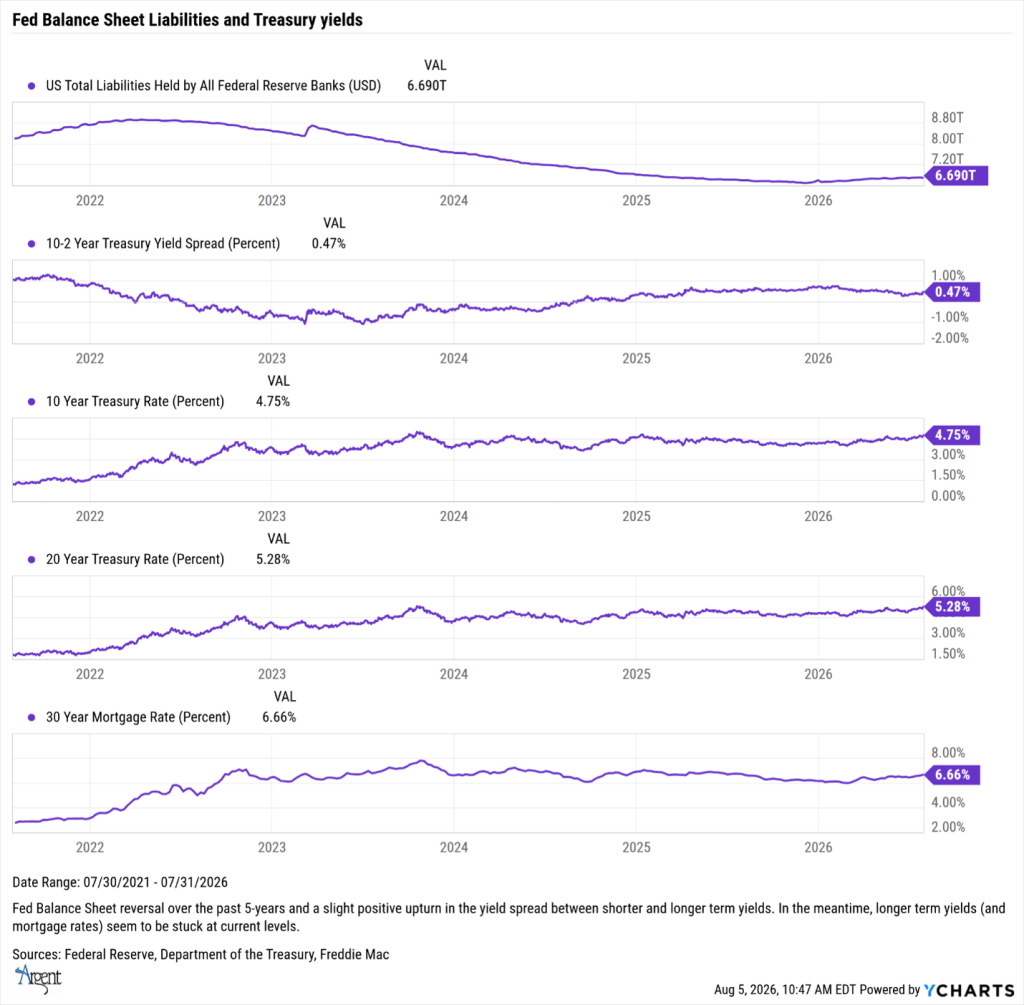
Housing presents a similar picture. Few sectors were expected to suffer more from higher interest rates than residential real estate. Mortgage rates rose to levels not experienced for many years, significantly reducing affordability and slowing transaction activity. Yet housing has demonstrated remarkable resilience, largely because the market continues to face a structural shortage of available homes.
Many homeowners remain reluctant to relinquish mortgages obtained during the exceptionally low-rate environment of 2020 and 2021. As a result, existing inventory has remained constrained even while demand moderated. That limited supply has prevented the widespread decline in home prices many analysts expected. Instead, prices have generally stabilized across most regions while builders continue responding to persistent demand for new construction.
Homebuilders have also adapted to the higher-rate environment. Financing incentives, mortgage-rate buydowns and product adjustments designed to improve affordability have allowed construction activity to remain healthier than anticipated. New home construction therefore continues contributing positively to economic growth while gradually addressing the nation’s housing shortage.
Housing should no longer be viewed solely through the lens of mortgage rates. Supply constraints, demographic trends and builder adaptation have fundamentally altered the dynamics of this housing cycle. Rather than experiencing a broad collapse like previous tightening periods, residential real estate appears to be transitioning toward a more balanced market characterized by constrained inventory and moderate demand.
Future risks certainly remain. Higher interest rates continue affecting affordability, and any meaningful deterioration in labor markets could eventually pressure household spending. At present, however, the available evidence indicates that consumers remain an important source of economic stability rather than economic weakness.
Corporate America Continues to Validate the Expansion
Ultimately, markets follow earnings. Economic forecasts, inflation expectations and Federal Reserve policy all influence investor sentiment, but over longer periods stock prices are determined by one factor above all others: the ability of businesses to generate growing cash flows and rising earnings. By that measure, the current reporting season has been exceptionally constructive.
Headline earnings growth this past quarter was influenced by unusually large non-operating gains reported by Alphabet and Amazon. Excluding both companies, the earnings surprise rate was still 9.2% and earnings growth remained 28.8%—strong enough to confirm that the quarter was not simply a two-company story.
Even after excluding those extraordinary items, S&P 500 earnings continue growing at a pace approaching 30% year-over-year, while revenue growth remains comfortably in double digits. In other words, although several technology companies produced extraordinary results, the underlying earnings story remains historically strong across the broader market.
The breadth of earnings growth may be even more encouraging than its magnitude. Ten of the eleven S&P 500 sectors are currently reporting positive year-over-year earnings growth. Eight sectors continue producing double-digit gains, led by Energy, Communication Services,Information Technology, Consumer Discretionary and Materials. Health Care represents the lone exception with modest earnings declines during the current reporting period.
Analyst expectations continue moving higher rather than lower. Consensus estimates now project continued double-digit earnings growth through the balance of the year. Third-quarter earnings are expected to advance by more than 25%, while full-year earnings growth approaches 30%. Although analyst estimates naturally evolve over time, the direction of revisions often provides the more valuable signal. Today, revisions continue moving higher, a pattern generally associated with expanding economic activity rather than deteriorating fundamentals. Corporate profits have effectively “grown into” higher stock prices, reducing valuation pressure without requiring a significant market correction.
Management commentary has been equally constructive. Throughout the earnings season, executives have consistently discussed capital investment, productivity improvements, automation initiatives, artificial intelligence deployment and long-term expansion opportunities. Conference calls remain centered on growth strategies rather than widespread cost reductions or defensive restructuring. Corporate willingness to continue investing, hiring and expanding productive capacity provides another indication that business confidence remains considerably stronger than many recession forecasts continue implying.
Markets Have Learned to Look Beyond the Headlines
One of the more encouraging developments over the past year has been the market’s growing ability to distinguish between short-term headlines and long-term fundamentals.
That does not suggest geopolitical events have become less important. Tariffs, military conflict, inflation and energy markets remain meaningful risks capable of influencing both economic activity and investor sentiment. Rather, investors appear increasingly willing to separate temporary uncertainty from developments likely to alter the long-term economic outlook.
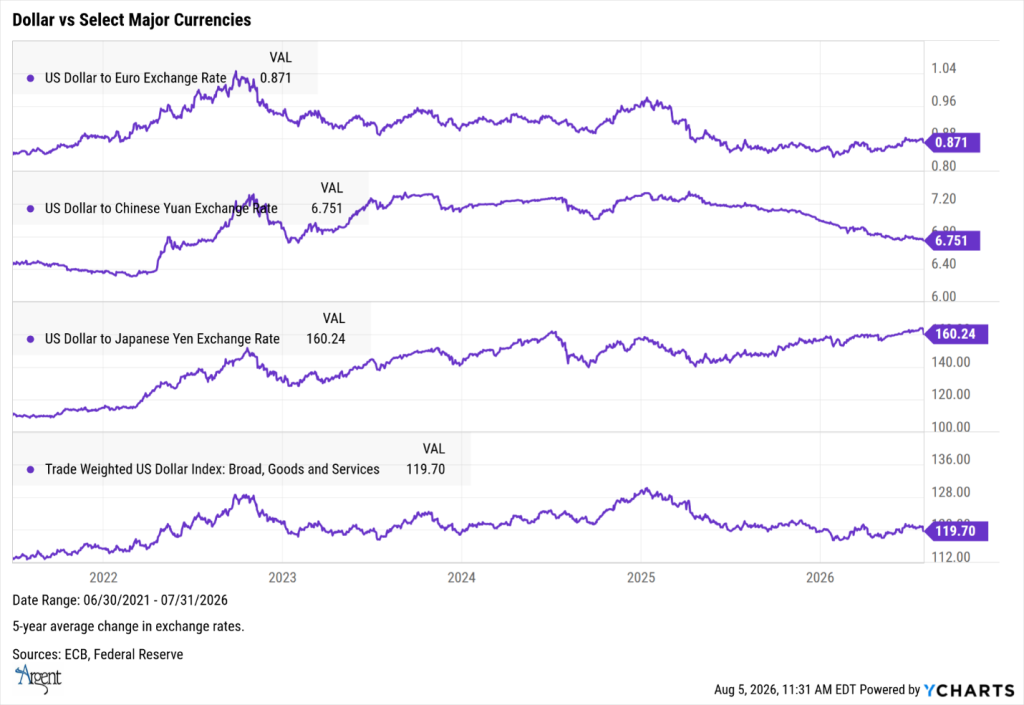
That distinction became evident following the Administration’s reciprocal tariff announcements. Investors initially priced in a broad range of worst-case outcomes, including higher import costs, renewed inflation, slower economic growth, compressed corporate margins and a more restrictive interest-rate environment. Equity markets reacted swiftly as uncertainty increased.
A similar pattern developed following the escalation of military conflict involving Iran. Brent crude settled at $90.12 per barrel on July 31 after gaining roughly 24% during the month, while the national average price of regular gasoline reached approximately $4.11 per gallon late in July. The inflation implications pushed the 10-year Treasury yield to about 4.74% at month-end, up roughly 0.32 percentage points during July, and raised concerns that monetary policy would remain restrictive for longer. Even with those pressures, equities finished the month close to record levels rather than signaling a breakdown in the broader expansion.
July’s index-level performance also concealed substantial rotation beneath the surface. Bespoke’s July 30 snapshot showed the capitalization-weighted S&P 500 down 0.82% for the month while the S&P 500 Equal Weight Index gained 1.3% and reached a new high. Seven of eleven equal-weight sectors outperformed their capitalization-weighted counterparts, and the cumulative advance/decline line also reached a record. Those measures suggest the market was broadening even as heavily weighted AI and momentum stocks corrected sharply.
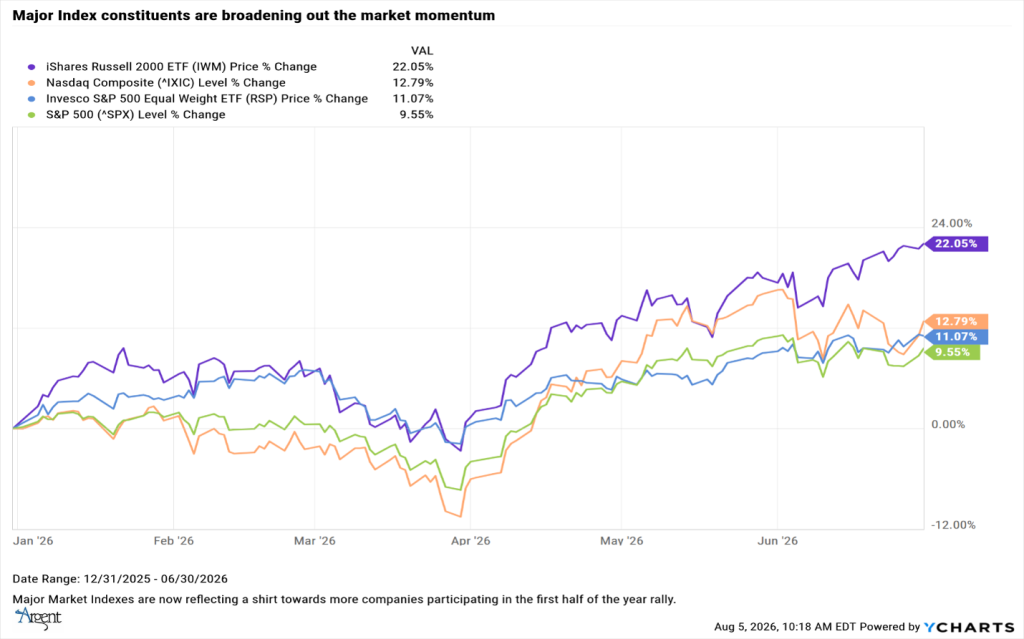
That pattern has become increasingly consistent throughout the current expansion. Bespoke reported that the Nasdaq was 7.2% below its June high and the Russell 2000 about 4% below its high, while the VIX remained near 17 and the S&P 500 traded close to its 50-day moving average. The disparity points to intense stock- and factor-level volatility rather than market-wide liquidation. July’s sharp reversal in AI-related shares also coincided with forced deleveraging and portfolio rebalancing: the 20 strongest S&P 500 performers from the first half fell an average 25.3% in July, while the 20 weakest first-half performers gained an average 12.2%. Fundamentals did not deteriorate at anything close to the speed implied by those price swings.
Tariffs remain a legitimate economic concern. Higher import costs can pressure corporate margins, reduce consumer purchasing power and create additional uncertainty for businesses operating within global supply chains. Certain industries remain more vulnerable than others, particularly companies possessing limited pricing power or significant dependence on imported intermediate goods.
Tariffs are also no longer an entirely new variable confronting investors. Businesses have spent more than a year adapting supply chains, adjusting pricing strategies and modifying procurement decisions. Investors have likewise had time to distinguish companies with pricing power and flexible supply networks from those more vulnerable to imported costs. That adaptation does not eliminate the inflation risk, but it helps explain why tariff announcements have produced shorter-lived market reactions than they did earlier in the cycle.
Renewed conflict involving Iran continues to present meaningful risks, particularly to energy supplies and inflation. Oil’s July trading range demonstrated how quickly the risk premium can change, while the rise in Treasury yields showed how energy shocks transmit into inflation expectations and valuation pressure. Yet credit spreads remained contained, and market breadth improved, indicating that investors viewed the episode as a significant inflation and volatility risk rather than an immediate threat to corporate solvency or economic expansion.
These risks deserve continued monitoring, but investors now possess a much clearer understanding of how geopolitical events transmit through the economy. Higher oil prices increase transportation costs, pressure corporate margins and influence inflation expectations. Inflation expectations affect bond yields, and bond yields influence both equity valuations and Federal Reserve policy expectations. These relationships are now well understood.
Consequently, markets increasingly differentiate between temporary supply disruptions and structural developments likely to alter the long-term trajectory of economic growth. Unless geopolitical events materially impair global production, significantly reduce corporate profitability or fundamentally change economic activity, investors have demonstrated a growing willingness to look beyond the initial headlines.
For long-term investors, that distinction remains particularly important. Investment success rarely depends upon accurately predicting every geopolitical headline. Instead, it depends upon correctly identifying the longer-term drivers of corporate earnings, productivity, capital formation and economic growth.
Investment Implications
Today’s consensus continues focusing primarily on Federal Reserve policy, inflation, tariffs and geopolitical uncertainty. Those issues deserve careful attention. Each has the potential to influence short-term market behavior, investor sentiment and economic expectations.
The evidence increasingly suggests, however, that they are no longer the principal drivers of this expansion. Business investment has accelerated despite elevated borrowing costs. Corporate earnings continue to exceed expectations across a broad range of industries. Productivity has improved. Consumer spending has remained resilient. Housing has stabilized despite mortgage rates remaining well above recent historical averages. International earnings growth has also strengthened, confirming that improving business conditions extend well beyond the United States.
Collectively, these developments suggest the economy has become increasingly capable of sustaining growth without relying upon additional monetary stimulus. If that assessment proves correct, investors may need to rethink several assumptions that have dominated market discussions during the past two years.
The first implication is that earnings quality should continue taking precedence over revenue growth alone. Companies capable of expanding both revenues and profit margins during a period of elevated interest rates typically possess durable competitive advantages, pricing power and disciplined capital allocation. The current earnings season continues to identify those characteristics across numerous sectors.
Second, the current capital expenditure cycle remains one of the most attractive long-term investment themes available today. Artificial intelligence continues attracting deserved attention, but the broader investment story extends well beyond technology. Manufacturing, industrial automation, electrical infrastructure, transportation, logistics, utilities and advanced production capacity all remain beneficiaries of sustained corporate investment. Businesses continue deploying capital to improve future productivity rather than simply maintaining existing operations.
Third, diversification has become increasingly important. Financials, Industrials, Energy, Materials and selected international markets have also contributed meaningfully to earnings growth. Broader participation provides a healthier foundation for long-term market advances and reduces dependence on a narrow group of mega-cap technology companies.
Fourth, investors should increasingly view volatility as opportunity rather than evidence that the expansion has fundamentally changed. Markets have repeatedly demonstrated an ability to recover from geopolitical shocks once confidence returns to underlying earnings and economic fundamentals. Future episodes of volatility will almost certainly occur, particularly surrounding tariffs, energy markets, inflation reports and central bank communications.
Finally, investors should continue distinguishing between developments that influence sentiment and those that alter intrinsic value. Daily headlines frequently affect investor psychology. Corporate earnings, productivity growth, capital formation and long-term economic expansion determine intrinsic value. While headlines may influence prices over days or weeks, fundamentals continue driving returns over years.
No economic expansion continues indefinitely, and risks remain. Inflation could prove more persistent than anticipated. Labor markets may soften further. Geopolitical tensions could escalate unexpectedly, and monetary policy always carries the possibility of unintended consequences. Those risks deserve continued monitoring and disciplined portfolio management.
At present, however, they remain balanced against an economy characterized by expanding productive investment, resilient consumers, improving productivity and historically strong corporate profitability.
For investors willing to look beyond the daily news cycle, the broader investment landscape continues appearing considerably more constructive than many expected entering the year. Markets ultimately reward businesses that invest wisely, allocate capital effectively and consistently grow earnings. Those characteristics continue defining today’s investment environment and remain the foundation of our long-term investment outlook.
Not Investment Advice or an Offer -This information is intended to assist investors. The information does not constitute investment advice or an offer to invest or to provide management services. It is not our intention to state, indicate, or imply in any manner that current or past results are indicative of future results or expectations. As with all investments, there are associated risks and you could lose money investing.


