

Announced this morning, the PCE Deflator decreased by 0.1% in June, as expected, and was up 3.7% on an annual basis. The annual increase was lower than the previous month. The Core PCE Deflator, which excludes food and energy prices and is closely monitored by the Federal Reserve for policy decisions, increased 0.1% in June, slightly less than expected, and grew 3.3% on an annual basis, which is one-tenth less than the previous month’s annual figure.
In addition, Personal Income increased 0.2% in June, slightly less than expected, and markedly less than the previous month’s increase. Personal Spending increased 0.3% in June, also slightly less than expected, and six-tenths less than the previous month’s increase. The personal savings rate as a percentage of disposable income was 2.7%, which remains below the level seen in the previous decade’s economic expansion. Meanwhile, the first estimate of GDP growth for the second quarter of 2026 was 1.5% on an annualized basis, less than expected.
Overall, the headline PCE deflator fell slightly in June as expected, driven by lower oil prices at that time due to events in the conflict with Iran. Core rates increased in the month less than expected; however, the annual increase is well above the Fed’s stated 2.0% target. And, with further escalation in the conflict this month, oil prices have moved higher, suggesting further upward pressure on inflation in the future. Following their meeting this week, the Federal Reserve chose to keep interest rates steady but highlighted their focus on maintaining price stability given elevated inflation.
Income and spending both increased slightly less than expected in June, and the increases were at lower levels than the previous month. The savings rate remains low overall, suggesting that consumers may be less tolerant if elevated inflation remains in place. The first reading of GDP in the second quarter was less than expected and less than the growth seen in the previous quarter, denoting an economy that is modestly growing, but likely below potential. Considering these data points and the ongoing geopolitical tensions, the ability of the consumer to maintain spending will remain key for the economy and markets in the coming weeks.
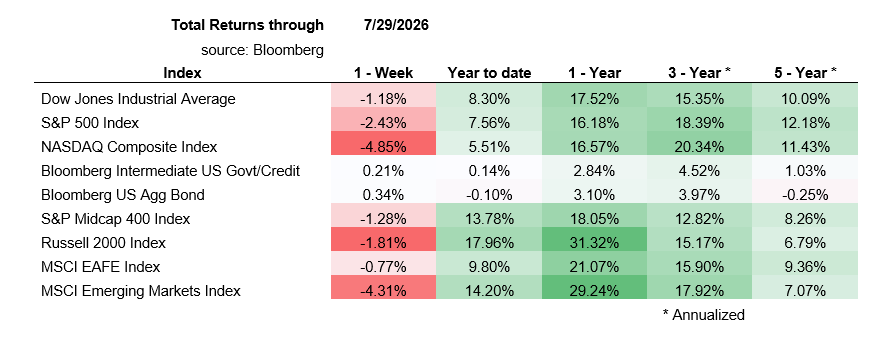
In all, the yield on the 10-year US Treasury ticks higher following the report and equity futures are also higher as we head into the market open.
This material is intended to be for informational purposes only and is intended for current or prospective clients of Argent Trust Company. This information is obtained from sources believed to be reliable, and its accuracy and completeness are not guaranteed. Information does not constitute a recommendation of any investment strategy, is not intended as investment advice, and does not take into account all the circumstances of each investor. Forward-looking assumptions are Argent Trust Company’s current estimates or expectations of future events or future results based on proprietary research and should not be construed as an estimate or promise of results that a portfolio may achieve. Actual results could differ materially from the results indicated by this information. Investments can go down as well as up. Past performance is not a reliable indicator of future results.


